Location Guide
14 July 2026
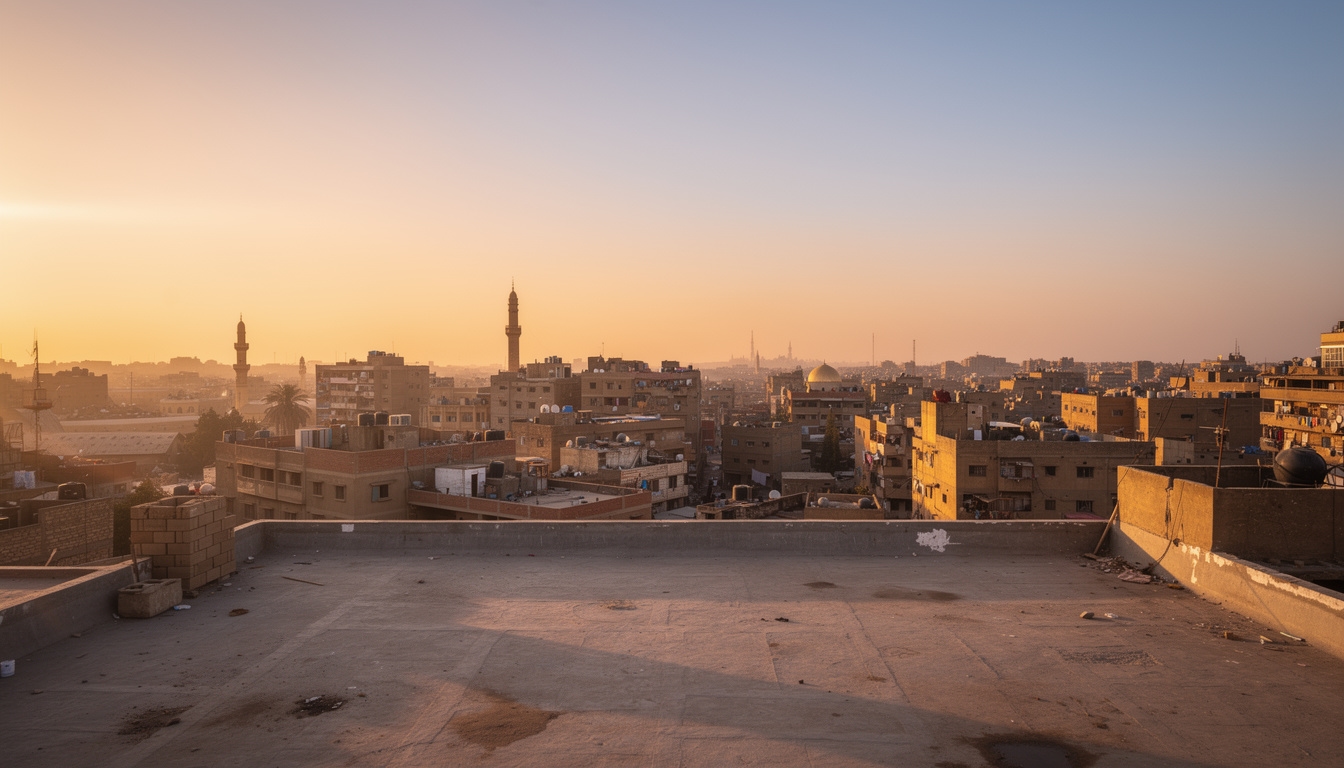
Filming on Cairo rooftops: what you need to know before you book
Cairo rooftops are among the most requested location types for commercial shoots and film productions in Egypt. The combination of skyline access, open air and proximity to architectural landmarks makes them visually versatile. Understanding what it takes to access and film on one is more involved than it might appear.
Most rooftops in Cairo are accessed through residential or commercial buildings. The property owner or building management must give permission for the shoot. Many will also require a copy of your filming permit before allowing crew access. The building's porterage staff are typically involved in facilitating entry and equipment movement, and their cooperation matters.
Power access is rarely reliable from building supply alone. Most productions on Cairo rooftops bring in a generator. We coordinate generator hire through our vendor network and confirm delivery timing with the building in advance. Unexpected generator arrivals at residential buildings create friction — planning this element carefully saves time on shoot day.
Noise and timing also matter. Residential buildings have active inhabitants. Early morning and late evening shoots require more careful management of crew noise and equipment movement. We flag these considerations in our location reports so productions can plan accordingly.
Back to Blog
Permits
28 June 2026
Filming permits in Egypt: which authority, which process
The permit landscape for filming in Egypt involves several different authorities depending on where and what you are filming. Heritage sites, public spaces, private land and government buildings each have their own approval chain. Understanding which authority is relevant to your location prevents delays that appear late in pre-production.
The Egyptian government's media and culture sector oversees filming activity broadly, but specific permit applications often go through local government offices, heritage authorities or individual ministry departments. For desert locations outside urban areas, additional coordination may be required with regional authorities.
Timeline matters significantly. Some permits are issued within days. Others, particularly for heritage sites and publicly visible government buildings, can take considerably longer. Productions that assume a short permit window often find themselves without approval when the shoot date arrives.
Logistics
10 June 2026
What on-site location coordination actually involves on shoot day
Location coordination on the day of a shoot is not a passive role. It involves active management of access, communication between the production and the property, and response to the things that do not go as planned. Understanding what this role covers helps productions allocate the right responsibilities.
The location coordinator arrives before the crew. They confirm access with the property contact, walk the space for any changes since the recce, and identify where equipment will be staged. When the crew arrives, the coordinator manages the flow of people and kit through the property so the production does not occupy spaces it has not agreed to use.
During the shoot, the coordinator handles issues as they arise. A neighbouring property objects to noise. The agreed lighting position turns out to interfere with building operations. A permit query is raised on arrival. These situations need a local, informed representative who can resolve them without interrupting the shoot.
Location Types
22 May 2026
Desert locations near Cairo: access, logistics and what to expect
Egypt's desert environments are visually distinctive and frequently used by international productions. The specific qualities of desert light, scale and visual emptiness are difficult to replicate elsewhere. Accessing these environments for a production involves logistics that differ substantially from urban shoots.
Proximity to Cairo does not mean easy access. Desert locations that appear close on a map often require unpaved road travel and specific vehicle types. Equipment trucks suitable for urban streets may not be appropriate. We identify and confirm vehicle access requirements for each desert location in our database.
Power is almost always self-supplied in desert settings. Generator capacity and fuel supply need to be calculated against the full duration of the shoot. Heat also affects equipment — particularly camera systems and lighting rigs. These are standard considerations that need explicit attention in pre-production rather than on the day.
Production Info
8 May 2026
The difference between a location scout and a production company in Egypt
Productions new to Egypt sometimes conflate location scouting services with full production companies. The distinction matters for budgeting, scoping and knowing who is responsible for what. First GT Location is a location service — we do not produce content, direct or provide creative services of any kind.
A location scout finds and manages physical spaces and the logistics around using them. A production company takes responsibility for the creative output — the film or commercial itself. If your production already has a director, crew and creative team, you may need location services without needing a full production company.
International productions in Egypt often arrive with a complete creative team and need only the local infrastructure: locations, permits and logistics. This is the scope we cover. Productions that need full in-country production support, including crew, talent or post-production, would typically engage a production company rather than a location service.
